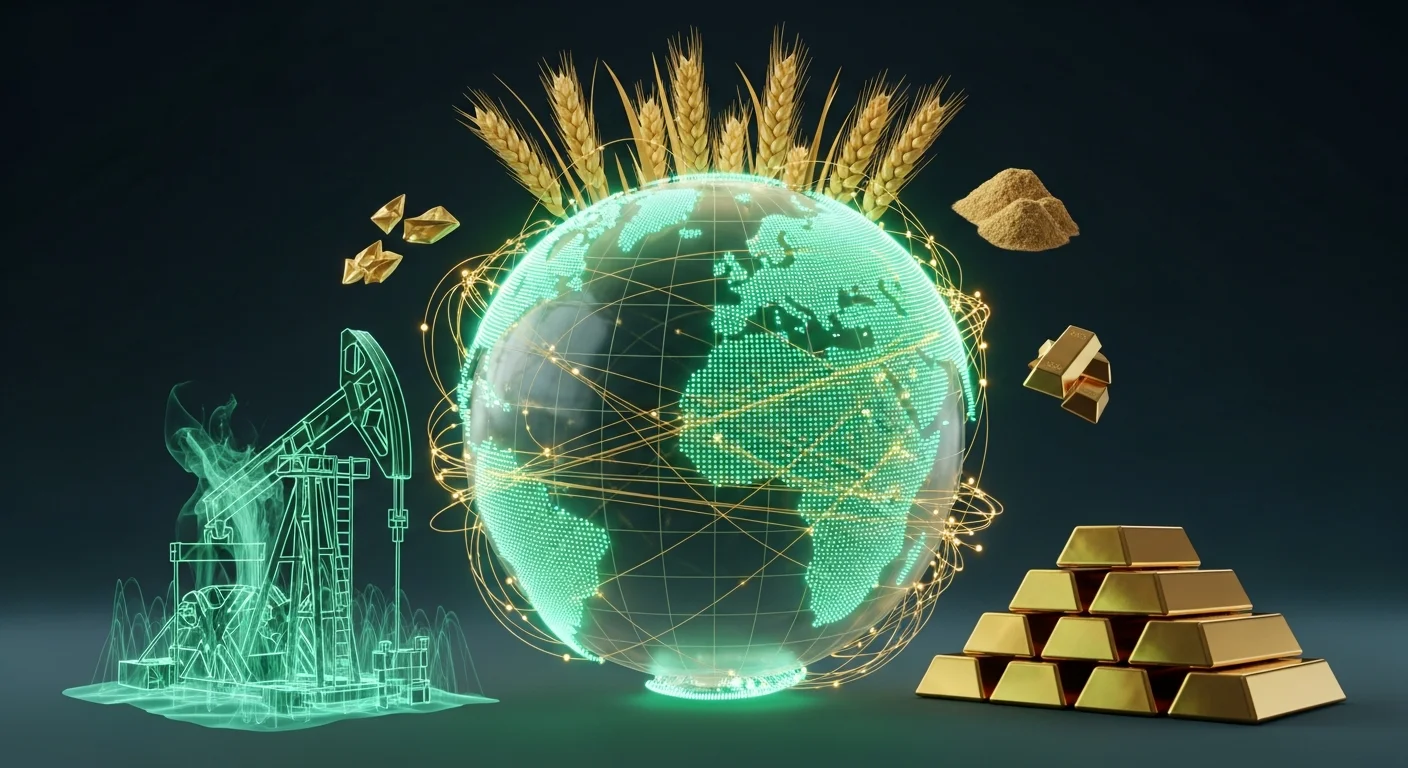
What Exactly Are Commodities? A Core Definition for Traders
In the realm of online trading, commodities are often discussed with a degree of abstraction, yet they form the bedrock of global economies and represent critical assets for any diversified portfolio. Simply put, a commodity is a basic good used in commerce that is interchangeable with other goods of the same type. This fungibility is its defining characteristic: one barrel of West Texas Intermediate (WTI) crude oil is considered equivalent to another, just as one ounce of pure gold is like any other. This standardization is crucial for efficient trading, as it removes subjective quality assessments.
These raw materials are essential inputs for almost every product and service we consume. From the gasoline in your car to the food on your plate, the copper in your electronics, or the gold in your jewelry, commodities are everywhere. For retail traders, understanding commodities goes beyond just recognizing their names; it's about grasping the dynamics of supply and demand, geopolitical influences, and the financial instruments used to trade them. They are tangible assets, unlike currencies or company stocks, grounding them in the physical world while their prices are often a proxy for global economic health and sentiment.
The Commodities Market: How It Functions and Why It Moves
The commodities market is a vast and intricate network where these essential goods are bought and sold. It operates primarily through two main segments: the spot market and the futures market.
- Spot Market: This is where commodities are exchanged for immediate delivery and payment. Think of buying oil on the spot market if you need physical barrels right now. While crucial for producers and consumers, direct spot trading of physical commodities is generally not accessible to the average retail trader due to logistical complexities and storage costs.
- Futures Market: This is the primary arena for speculation and price discovery for retail traders. A futures contract is an agreement to buy or sell a specific quantity of a commodity at a predetermined price on a future date. Traders use futures to hedge against price fluctuations (producers/consumers) or to speculate on future price movements (speculators). The beauty of futures, and by extension, Contracts for Difference (CFDs) based on them, is that you don't take physical delivery. You're purely betting on the price difference.
⚡ Featured Brokers


Commodity prices are notoriously volatile, influenced by a confluence of factors:
- Supply and Demand: The most fundamental driver. Crop yields, mining output, and oil production cuts on the supply side, coupled with industrial demand, consumer spending, and population growth on the demand side, dictate price trends.
- Geopolitical Events: Conflicts, political instability, and trade wars can disrupt supply chains or create uncertainty, leading to sharp price movements, particularly in energy commodities like oil and natural gas.
- Weather Patterns: Agricultural commodities are highly sensitive to weather events such as droughts, floods, or extreme temperatures, which can severely impact harvests.
- Economic Data: Global economic growth forecasts, inflation reports, and interest rate decisions can signal changes in industrial demand and investor sentiment, impacting prices across the board.
- Currency Fluctuations: Since many commodities are priced in USD, a stronger dollar can make commodities more expensive for buyers using other currencies, potentially dampening demand.
Consider Gold (XAUUSD) for example. Its price movements are often driven by perceived economic instability, inflation fears, or geopolitical tension, leading to its status as a safe-haven asset. Trading such volatile assets requires rigorous risk management, an area where algorithmic systems excel. The strategies developed by SVX Strategies are specifically designed to navigate and capitalize on market volatility, applying systematic approaches to manage risk effectively in instruments like XAUUSD.
Deconstructing "Commodities" – Exploring Synonyms and Closely Related Terms
While "commodities" is the overarching term, the financial world often uses several synonyms or more specific classifications that are important for a discerning trader to understand. These terms, though related, carry distinct nuances.
Raw Materials
Often used interchangeably with commodities, raw materials strictly refer to the basic substances used in the primary production or manufacturing of goods. While all commodities can be considered raw materials, not all raw materials are necessarily traded on an organized exchange in a standardized, fungible manner. For instance, specialized timber might be a raw material, but if it doesn't meet specific grading standards for futures contracts, it wouldn't be a commodity in the financial trading sense. However, broadly speaking, when we discuss oil, iron ore, or cotton in the context of global trade, they are both commodities and raw materials.
Natural Resources
This term has a broader scope, encompassing anything derived from the earth without human intervention. This includes not just commodities like oil, gas, and minerals, but also water, forests, and even land itself. While many natural resources are commodities, the term "natural resources" highlights their origin and often carries implications for environmental policy and sustainability. In finance, when we talk about investing in natural resources, we usually refer to companies involved in their extraction or processing, or trading the specific commodities derived from them.
Hard vs. Soft Commodities
This is a critical distinction in commodity trading:
- Hard Commodities: These are typically natural resources that must be mined or extracted from the earth. They include:
- Energy: Crude oil (WTI, Brent), natural gas, heating oil, gasoline.
- Precious Metals: Gold, silver, platinum, palladium.
- Industrial Metals: Copper, aluminum, nickel, zinc.
Hard commodities are generally considered more resistant to spoilage and can be stored for longer periods.
- Soft Commodities: These are typically agricultural products or livestock, grown or reared. They include:
- Grains: Wheat, corn, soybeans, rice.
- Softs (Tropical): Coffee, cocoa, sugar, cotton, orange juice.
- Livestock: Live cattle, lean hogs.
Soft commodities are often seasonal, perishable, and highly susceptible to weather conditions, making them exceptionally volatile.
Here’s a breakdown for clarity:
| Category | Examples | Characteristics | Key Influencers |
|---|---|---|---|
| Hard Commodities | Gold, Crude Oil, Copper, Natural Gas | Mined/Extracted, durable, less perishable | Geopolitics, Industrial Demand, Global Economic Growth, Mining Output |
| Soft Commodities | Wheat, Coffee, Sugar, Cotton, Live Cattle | Grown/Reared, seasonal, perishable, high impact from weather | Weather, Crop Yields, Disease, Consumer Taste, Trade Policies |
Energy Commodities
This specific category focuses on sources of energy. The most prominent are crude oil (WTI and Brent), natural gas, and refined products like gasoline and heating oil. Their prices are driven by global economic activity, geopolitical stability, production quotas (e.g., OPEC+ decisions), and the ongoing transition to renewable energy. Trading energy CFDs is popular due to their high liquidity and strong trending capabilities.
Agricultural Commodities
As the name suggests, this category covers products of farming, including grains (wheat, corn, soybeans), livestock (cattle, hogs), and softs like coffee, sugar, and cocoa. These are profoundly affected by weather, disease, government subsidies, and global food demand.
Metals
Divided into two main sub-categories:
- Precious Metals: Primarily gold, silver, platinum, and palladium. These are often seen as safe havens during economic uncertainty and are also used in jewelry and industrial applications. Gold (XAUUSD) in particular is a perennial favorite for traders.
- Industrial Metals: Such as copper, aluminum, nickel, and zinc. Their prices are highly correlated with industrial production and global economic growth, especially from major manufacturing hubs.
Financial Instruments Based on Commodities
For retail traders, the primary way to gain exposure to commodities is not through physical delivery but via financial instruments that derive their value from underlying commodity prices. These include:
- Futures Contracts: As discussed, agreements to buy/sell at a future date.
- Options: Give the holder the right, but not the obligation, to buy/sell a commodity future at a certain price.
- Exchange-Traded Funds (ETFs): Funds that hold commodity futures or physical commodities, allowing diversified exposure.
- Contracts for Difference (CFDs): The most accessible route for retail traders. CFDs allow speculation on the price movement of an underlying commodity without owning the asset itself. This is where your choice of broker becomes paramount.
Why Retail Traders Engage with Commodities CFDs
Commodity CFDs offer several compelling reasons for retail traders to participate in these markets:
- Leverage: Brokers typically offer significant leverage on commodity CFDs, meaning you can control a large position with a relatively small amount of capital. While this amplifies potential profits, it equally amplifies potential losses, necessitating robust risk management.
- Diversification: Adding commodities to a trading portfolio can provide diversification, as their price movements often have a low correlation with traditional assets like stocks and bonds. This can help reduce overall portfolio risk.
- Speculation on Price Movements: The inherent volatility of commodities presents ample opportunities for short-term and medium-term speculation. Traders can profit from both rising (long positions) and falling (short positions) prices.
- Accessibility: Through CFD brokers, retail traders can easily access global commodity markets with relatively low minimum deposits. Brokers like FP Markets, a premium partner, provide a wide array of commodity CFDs, from crude oil to gold and agricultural products. Other excellent options include IC Markets and Pepperstone , both known for their competitive spreads and execution.
Here's a glimpse at popular commodity CFDs available for trading:
| Commodity CFD | Underlying Asset | Typical Spreads (variable) | Key Market Hours (UTC) | Leverage (variable by region) |
|---|---|---|---|---|
| XAUUSD | Gold | Very low | 22:00 Sunday - 21:00 Friday | Up to 1:500 |
| WTI Crude Oil | US Crude Oil | Medium | 23:00 Sunday - 22:00 Friday | Up to 1:200 |
| Brent Crude Oil | UK Crude Oil | Medium | 23:00 Sunday - 22:00 Friday | Up to 1:200 |
| Natural Gas | Natural Gas | Medium to High | 23:00 Sunday - 22:00 Friday | Up to 1:100 |
| Copper | Copper Futures | Medium | 22:00 Sunday - 21:00 Friday | Up to 1:100 |
| Coffee | Coffee Futures | Medium to High | Weekdays, specific sessions | Up to 1:50 |
Note: Spreads and leverage are indicative and vary significantly between brokers and regulatory jurisdictions. Always check your broker's specific terms.
Navigating Volatility: Risk Management in Commodity Trading
The inherent volatility of commodity markets, while offering profit potential, also demands stringent risk management. Trading without a clear strategy for managing downside risk is reckless.
- Stop-Loss Orders: These are non-negotiable. A stop-loss order automatically closes your position if the price moves against you by a predefined amount, limiting potential losses.
- Position Sizing: Never risk more than a small percentage (e.g., 1-2%) of your total trading capital on any single trade. Proper position sizing is crucial for longevity in volatile markets.
- Understanding Leverage: While leverage can boost returns, it can also magnify losses. Use it judiciously and understand the margin requirements.
- Market Analysis: Staying informed about global economic news, geopolitical developments, and supply/demand fundamentals is vital. For deeper insights, see The Anatomy of a Market Narrative: How Stories Drive Value Beyond Fundamentals in 2026.
In this dynamic environment, automated trading systems truly shine. They remove emotional biases, execute trades based on predefined rules, and can react to market shifts with unparalleled speed. Our SVX Strategies system is built on these principles, using data-driven algorithms to manage risk and exploit trading opportunities, particularly in volatile assets like Gold (XAUUSD). Automation ensures consistency and discipline, two traits often lacking in manual trading, especially during high-stress market events.
Choosing a Broker for Commodity CFD Trading in 2026
The choice of your CFD broker is as crucial as your trading strategy itself. A reliable broker provides the platform, execution, and instruments necessary for successful commodity trading. When evaluating options, consider:
- Regulation: Always prioritize brokers regulated by tier-one authorities (e.g., ASIC, FCA, CySEC). This ensures client fund segregation and adherence to strict operational standards. For a detailed guide, refer to Why Your Forex Broker's Trust Score Matters: A 2026 Guide.
- Range of Commodities: Does the broker offer the specific commodity CFDs you wish to trade? Most will have oil and gold, but fewer might offer soft commodities or industrial metals.
- Spreads and Commissions: These directly impact your trading costs. Look for competitive spreads and transparent commission structures.
- Execution Speed: Slippage can erode profits, especially in fast-moving commodity markets. Fast and reliable execution is paramount.
- Trading Platform: MetaTrader 4 (MT4) and MetaTrader 5 (MT5) are industry standards, but some brokers offer their proprietary platforms like cTrader or xStation.
- Customer Support: Responsive and knowledgeable support can be invaluable, particularly when dealing with technical issues or urgent inquiries.
Our premium partner, FP Markets, stands out for its extensive range of commodity CFDs, competitive spreads, and robust MetaTrader platforms, making it an excellent choice for serious commodity traders. Other reputable brokers like XM and Fusion Markets also offer solid options for CFD trading across various asset classes, including commodities. For a more comprehensive overview of selecting a broker, read Why Your Choice of Forex Broker in 2026 is Crucial: A Comprehensive Checklist.
Commodity Market Dynamics in 2026: Trends and Outlook
As of mid-2026, commodity markets remain at the forefront of global economic discussions. Key trends impacting them include:
- China's Economic Contraction: The slowdown in China, a manufacturing powerhouse and massive consumer of raw materials, continues to cast a long shadow over industrial metals and energy demand. This has significant implications for global equities and commodities, as explored in China's Economic Contraction: What It Means for Global Equities and Commodities in 2026.
- Energy Transition: The ongoing global push towards renewable energy sources is creating a complex dynamic for traditional energy commodities. While demand for fossil fuels might soften long-term, short-term supply disruptions or geopolitical tensions can still cause price spikes. Simultaneously, demand for "green metals" like copper, lithium, and nickel is surging.
- Geopolitical Instability: Persistent conflicts and regional tensions continue to fuel uncertainty, particularly for oil and gas prices. Supply chain vulnerabilities remain a concern, underscoring the importance of diversification and agility for traders.
- Inflationary Pressures: While central banks have made strides against inflation, commodity prices remain a key component of the inflationary basket. Any resurgence in commodity prices could lead to renewed inflationary pressures, influencing monetary policy globally.
These complex interactions highlight why a data-driven approach is increasingly essential for commodity trading.
The Role of Data Science and Automation in Commodity Trading
The sheer volume of data influencing commodity markets – from satellite imagery of crop fields to real-time shipping data and macroeconomic indicators – makes it an ideal domain for data science and algorithmic trading.
- Predictive Analytics: Machine learning models can analyze vast datasets to identify patterns and predict future price movements with a higher degree of accuracy than human analysis alone. This includes sentiment analysis of news and social media, which can significantly impact market psychology, as detailed in The Digital Herd: How Emotional Contagion on Social Media Drives Market Cycles in 2026.
- Algorithmic Execution: Algorithms can execute trades instantaneously, capitalizing on fleeting opportunities and ensuring optimal entry and exit points. This is particularly valuable in fast-moving commodity markets where every millisecond counts.
- Risk Management Automation: Automated systems can monitor positions, calculate risk exposure, and deploy stop-loss orders without emotional hesitation, adhering strictly to predefined risk parameters. This is a core strength of systems like SVX Strategies , providing consistent and disciplined risk control.
- Pattern Recognition: AI can identify complex chart patterns or inter-market relationships that human traders might miss, providing early signals for potential reversals or continuations.
For traders looking to leverage these cutting-edge techniques, understanding the principles of AI and machine learning in finance is no longer optional. Dive deeper into this topic with The Ultimate AI Investing Playbook for 2026: Machine Learning Strategies to Master. The future of commodity trading undoubtedly lies in the strategic integration of human insight with advanced technological capabilities.
Frequently Asked Questions
What are the main types of commodities available for trading?
The main types include Energy (crude oil, natural gas), Metals (gold, silver, copper), and Agricultural products (wheat, coffee, sugar, livestock). These are often categorized as Hard (mined/extracted) or Soft (grown/reared).
How do retail traders typically access commodity markets?
Retail traders primarily access commodity markets through Contracts for Difference (CFDs) offered by online brokers. CFDs allow speculation on price movements without needing to take physical delivery of the underlying asset. Futures contracts are also an option for some.
Why are commodity prices so volatile?
Commodity prices are highly volatile due to a range of factors including supply and demand imbalances, geopolitical events, weather patterns affecting agricultural yields, global economic data, and currency fluctuations. Even minor disruptions can have significant impacts.
What is the difference between a "commodity" and a "raw material"?
While often used interchangeably, "raw material" refers to any basic substance used in manufacturing. A "commodity" is a raw material that is standardized, fungible, and traded on organized exchanges, allowing for easy interchangeability. So, all commodities are raw materials, but not all raw materials are commodities in the financial sense.
Is trading commodity CFDs risky?
Yes, trading commodity CFDs carries high risk due to the inherent volatility of commodities and the use of leverage. Leverage can amplify both profits and losses, making proper risk management, including stop-loss orders and appropriate position sizing, absolutely essential.
Which brokers are recommended for commodity CFD trading?
Many reputable brokers offer commodity CFD trading. FP Markets is a premium partner known for its extensive range and competitive conditions. Other strong choices include IC Markets , Pepperstone , and XM , all offering diverse instruments and robust platforms.
How can algorithmic trading help in commodity markets?
Algorithmic trading helps by removing emotional bias, executing trades at optimal speeds, and systematically managing risk based on predefined rules. Systems like SVX Strategies leverage data science to identify patterns and capitalize on volatility in commodity markets, enhancing discipline and consistency.
Disclaimer: Content for educational purposes only. Not financial advice. Trading carries high risk. Past performance of SVX or any system does not guarantee future results.
📡 FBC Ecosystem:
This analysis is just one piece of the puzzle.
- For tactical execution: Follow X (Twitter)
- For the morning briefing: Join Telegram

.webp)