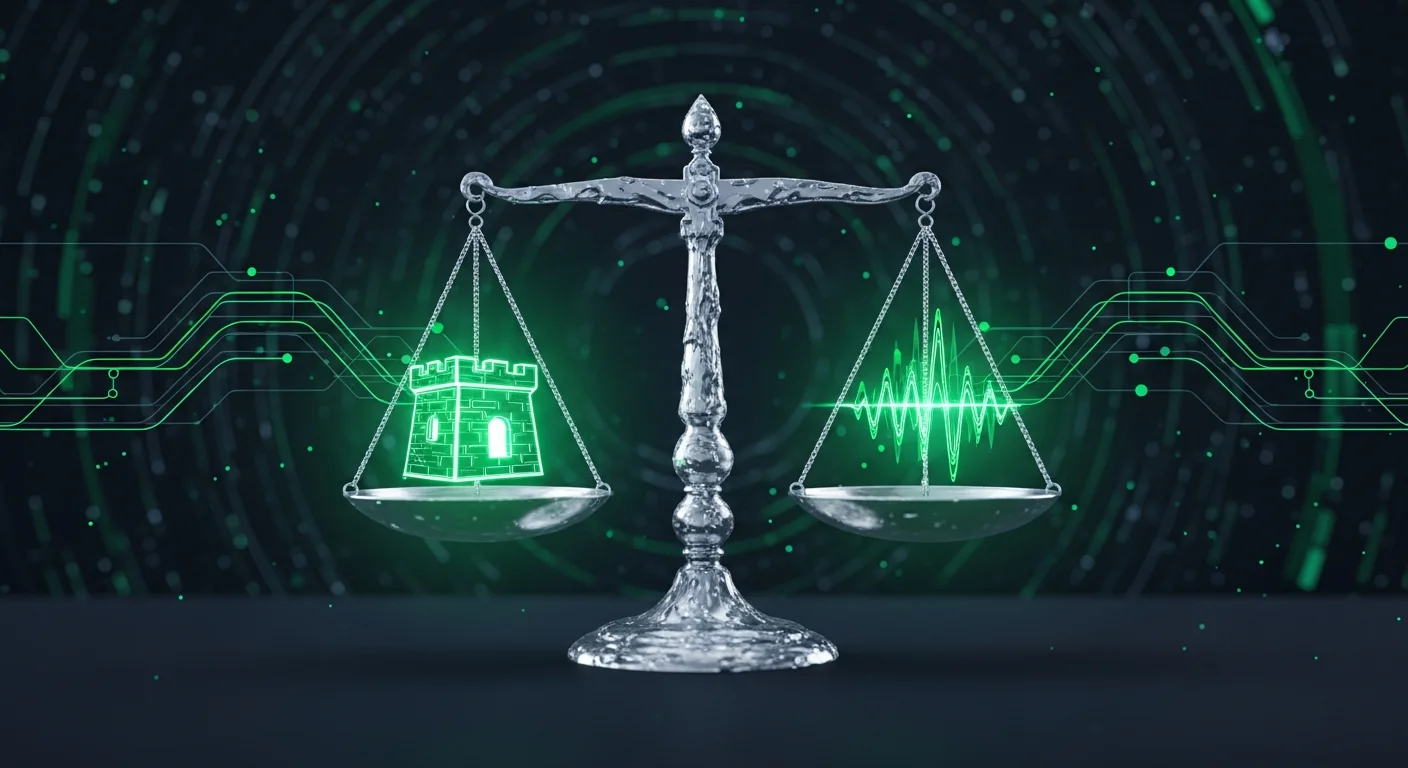
Decentralized AI represents a paradigm shift in how we approach artificial intelligence, moving away from centralized control and towards a more open, transparent, and equitable future. In 2026, this convergence of blockchain technology and AI is no longer just a theoretical concept; it's actively reshaping computing infrastructure and opening new frontiers for innovation, especially in areas like financial markets. At its core, decentralized AI leverages cryptographic principles and distributed networks to create AI systems that are more robust, secure, and resistant to censorship, fundamentally altering the landscape for data, computation, and algorithmic development.
The Problem with Centralized AI
To truly grasp the power of decentralized AI, we must first understand the inherent vulnerabilities and limitations of its centralized counterpart. For decades, AI development has been dominated by a handful of tech giants. This concentration of power presents several critical challenges:
- Data Monopolies: Large corporations control vast datasets, which are the lifeblood of modern AI. This creates walled gardens, limiting access for smaller innovators and perpetuating a cycle where only the most well-resourced entities can train powerful models. Data privacy concerns are paramount here; users often have little control over how their data is collected, used, or potentially exploited.
- Censorship and Bias: Centralized AI models, whether intentionally or unintentionally, can embed biases present in their training data or reflect the values of their creators. This leads to discriminatory outcomes in applications ranging from loan approvals to hiring algorithms. Furthermore, the potential for censorship or manipulation of AI outputs by a single entity is a significant concern for free information and open discourse.
- Single Points of Failure: A centralized infrastructure is inherently vulnerable. If a central server goes down, or a company's data center is compromised, the entire AI system can be disrupted or even destroyed. This poses significant risks for critical applications that rely on continuous AI operation.
- Resource Inefficiency: Training complex AI models requires immense computational power, often leading to underutilized resources in existing data centers. There's a fundamental inefficiency in how these resources are currently allocated and accessed.
These issues are not just theoretical; they have real-world implications across industries. Decentralized AI seeks to address these systemic problems by distributing control, computation, and data across a network, much like how blockchain revolutionized digital trust.
⚡ Featured Brokers



Crypto's Role in Powering Decentralized AI
The blockchain and cryptocurrency ecosystem provides the perfect substrate for building decentralized AI. Its core tenets — decentralization, transparency, immutability, and incentive mechanisms — are precisely what's needed to overcome the limitations of centralized AI.
Decentralized Compute Power
One of the most immediate and impactful contributions of crypto to AI is the creation of decentralized computing networks. Training sophisticated AI models, especially large language models (LLMs) or complex neural networks, demands colossal computational resources. Instead of relying on expensive, proprietary cloud services, decentralized networks allow users to harness idle GPU and CPU power from a global network of participants.
Projects like Render Network and Golem are at the forefront of this movement. They enable anyone with spare computing power to contribute it to the network and earn cryptocurrency in return. This not only democratizes access to high-performance computing but also creates a more resilient and cost-effective infrastructure for AI development. Imagine a world where the next breakthrough AI isn't limited by the budget of a tech giant, but by the collective power of a global community. For those of us running high-frequency trading algorithms, leveraging such distributed compute resources could significantly enhance the speed and efficiency of backtesting and real-time model adjustments, an area where SVX Strategies always seeks an edge.
Decentralized Data Markets
Data is the new oil, and in the AI era, it's arguably even more valuable. Decentralized data markets aim to break down data silos and empower data owners. Platforms like Ocean Protocol allow individuals and organizations to securely share and monetize their data without intermediaries, maintaining control over their assets. Data providers can cryptographically prove ownership and license access to their datasets, earning crypto tokens when their data is used to train AI models.
This system fosters greater transparency and fairness in data utilization. It also incentivizes the creation of high-quality, diverse datasets, which are crucial for developing unbiased and robust AI. Crucially, it gives individuals agency over their digital footprint, a stark contrast to the opaque data practices of many centralized entities. For traders looking for an informational advantage, access to diverse, verified datasets through decentralized markets could be a game-changer for predictive modeling.
Decentralized Algorithmic Development and Verification
The transparency and immutability of blockchain also extend to the development and deployment of AI algorithms. Decentralized AI platforms can facilitate:
- Open-Source AI Models: Encouraging collaborative development of AI models where code is auditable and verifiable on a blockchain. This fosters trust and reduces the risk of malicious or biased algorithms being deployed undetected.
- Collective Intelligence: Incentivizing a global community to contribute to the training, validation, and improvement of AI models. This collective effort can lead to more robust and accurate AI systems faster than a single team could achieve.
- Verifiable AI Execution: Ensuring that AI models execute as intended and that their outputs haven't been tampered with. This is vital for critical applications like automated trading systems or medical diagnostics, where trust in the AI's integrity is paramount.
The Rise of Crypto AI Trading Bots
This is where the rubber meets the road for many traders. The synergy between crypto AI and automated trading is explosive. Crypto AI trading bots, often referred to as `crypto ai trading bot` or `ai crypto prediction` tools, are leveraging these decentralized advancements to offer more sophisticated, autonomous, and potentially profitable trading strategies.
Traditional algorithmic trading, while powerful, often relies on centralized data feeds and proprietary models. Decentralized AI introduces:
- Enhanced Data Access: Bots can tap into decentralized data markets for a broader, potentially less biased, and more diverse range of market information, sentiment data, and alternative datasets.
- Robust Predictive Models: With access to decentralized compute, AI models can be trained on larger datasets and run more complex simulations, leading to more accurate `crypto ai predictions`. These models can identify subtle patterns and correlations that human traders or simpler algorithms might miss, offering a significant edge.
- Censorship-Resistant Operation: If the bot's logic and data sources are decentralized, it's less susceptible to single points of failure or external interference. This is crucial for maintaining operational integrity, especially during volatile market conditions.
- Transparency and Auditability: While proprietary algorithms will always exist, the trend in decentralized AI is towards greater transparency. This could mean more auditable components for specific modules of a bot, increasing user trust.
Brokers like FP Markets and RoboForex are already at the forefront of supporting automated trading solutions, including Expert Advisors and custom bots. The integration of decentralized AI principles into these bots will likely involve:
- Decentralized Oracles: Providing reliable, tamper-proof real-world data (price feeds, economic indicators) to on-chain AI models.
- Smart Contracts for Strategy Execution: Automating trade execution based on AI signals, ensuring pre-defined rules are followed without human intervention, reducing psychological biases.
- Predictive Market Mechanisms: Leveraging AI to forecast market movements and integrate these predictions directly into automated trading strategies.
For a deeper dive into AI-driven strategies, check out The Ultimate AI Investing Playbook for 2026: Machine Learning Strategies to Master. The synergy between AI and automated trading is undeniable, as explored further in The AI Revolution in Forex: Automated Trading and Advanced Analytics Reshape 2026.
Key Decentralized AI Projects and Their Impact (2026 Snapshot)
The ecosystem of `best artificial intelligence cryptocurrency` projects is vibrant and rapidly evolving. Here's a snapshot of some prominent players and what they bring to the table in 2026, offering potential for investors looking for `ai crypto list` options, including those found as `ai coins on coinbase` or other major exchanges.
| Project Name | Primary Function | Key Features | Potential Market Impact |
|---|---|---|---|
| Fetch.ai (FET) | Decentralized AI Agents | AI agent network, autonomous economic agents, Web3 infrastructure | Automated services, DeFi optimization, supply chain efficiency |
| SingularityNET (AGIX) | AI Marketplace | Decentralized AI services, AI agent interoperability, AGI research | Access to diverse AI algorithms, collaborative AI development |
| Render Network (RNDR) | Decentralized GPU Rendering | Distributed compute for rendering, AI model training | Cheaper, faster access to high-end GPU power for creators and AI developers |
| Ocean Protocol (OCEAN) | Decentralized Data Exchange | Secure data sharing, data monetization, privacy-preserving analytics | Data liquidity, fair compensation for data owners, new data-driven markets |
| Numeraire (NMR) | Decentralized Hedge Fund/ML Prediction | AI-powered quantitative trading, incentivized model submissions | Crowdsourced financial predictions, transparent trading strategies |
| The Graph (GRT) | Decentralized Indexing | Indexing and querying blockchain data efficiently | Foundation for dApps and AI models needing on-chain data access |
When considering `ai coins on coinbase` or other platforms, it's crucial to research the underlying technology, adoption rates, and development roadmap. Some of these tokens represent not just speculative assets but stakes in the future of computing infrastructure. The institutional landscape for crypto is also evolving rapidly, which we discuss in The Institutional Embrace of Crypto: Spot ETFs, RWAs, and the Reshaping of Traditional Finance in 2026, indicating growing mainstream interest in the sector.
Challenges and the Future of Decentralized AI
Despite its immense potential, decentralized AI faces significant hurdles that must be overcome for widespread adoption:
- Scalability: Blockchain networks, particularly for complex AI computations, can struggle with scalability. Solutions like Layer 2 networks and new consensus mechanisms are continuously being developed to address this.
- Technical Complexity: Building and deploying decentralized AI applications still requires a high level of technical expertise, which can be a barrier to entry for many developers.
- Regulatory Uncertainty: The regulatory landscape for cryptocurrencies and decentralized technologies remains fluid. Clearer guidelines are needed to foster innovation while protecting users.
- User Experience: For mainstream adoption, decentralized AI tools need to become as intuitive and user-friendly as their centralized counterparts.
However, the trajectory is clear. In 2026, we are witnessing the foundational layers being built for a truly autonomous, intelligent web. Decentralized AI promises to democratize access to AI, protect data privacy, and foster a more open and equitable digital future. It's not just about improving existing AI; it's about creating entirely new possibilities that were previously constrained by centralized control. The long-term vision is a global brain, powered by crypto, that is permissionless, censorship-resistant, and serves humanity's collective intelligence. This evolution will undeniably impact financial markets, enabling a new generation of sophisticated `crypto ai prediction` tools and trading strategies that are more resilient and transparent.
Frequently Asked Questions
What is decentralized AI?
Decentralized AI combines artificial intelligence with blockchain technology to create AI systems that are distributed, transparent, and resistant to central control. This means computation, data, and algorithms are shared across a network, rather than being controlled by a single entity, enhancing privacy, security, and accessibility.
How can I invest in decentralized AI?
Investing in decentralized AI primarily involves acquiring the native cryptocurrencies (tokens) of projects building in this space. These are often referred to as `best artificial intelligence cryptocurrency` tokens. You can find many of these `ai coins on coinbase` or other major crypto exchanges. Always conduct thorough research into the project's technology, team, use case, and market adoption before investing.
Can crypto AI trading bots predict market movements accurately?
Crypto AI trading bots leverage machine learning and advanced algorithms to analyze vast amounts of data and identify patterns that may lead to profitable trades. While they can offer sophisticated `crypto ai predictions` and enhance trading efficiency, no bot can guarantee 100% accuracy or profits. Markets are inherently unpredictable, and trading always carries risk. These tools offer probabilities, not certainties.
What are some examples of AI crypto projects?
Some leading `ai crypto list` projects include Fetch.ai (for decentralized AI agents), SingularityNET (for an AI services marketplace), Render Network (for decentralized GPU computing), and Ocean Protocol (for decentralized data exchange). These projects address different facets of the decentralized AI ecosystem.
What are the benefits of using a crypto AI trading bot?
Crypto AI trading bots offer several benefits, including the ability to execute trades 24/7 without emotional bias, process vast amounts of data faster than humans, and identify complex market patterns. When powered by decentralized AI, they can also benefit from more transparent data sources and robust, distributed computing power, leading to potentially more reliable and resilient strategies.
Is AI integration into trading platforms becoming standard?
Yes, AI is rapidly becoming a standard component in modern trading platforms. From basic algorithmic order execution to complex predictive analytics and sentiment analysis, AI is transforming how traders operate. Many brokers, including FP Markets and Eightcap , offer robust platforms that support AI-driven trading strategies and automated bots.
What should I consider before using an AI crypto trading bot?
Before using an `crypto ai trading bot`, consider its transparency, historical performance (understanding that past results don't guarantee future ones), the underlying AI model's verifiable claims, the fees involved, and the level of customization it offers. It's crucial to understand the strategy the bot employs and to test it thoroughly, preferably in a demo environment, before committing real capital.
Disclaimer: Content for educational purposes only. Not financial advice. Trading carries high risk. Past performance of SVX or any system does not guarantee future results.
📡 FBC Ecosystem:
This analysis is just one piece of the puzzle.
- For tactical execution: Follow X (Twitter)
- For the morning briefing: Join Telegram