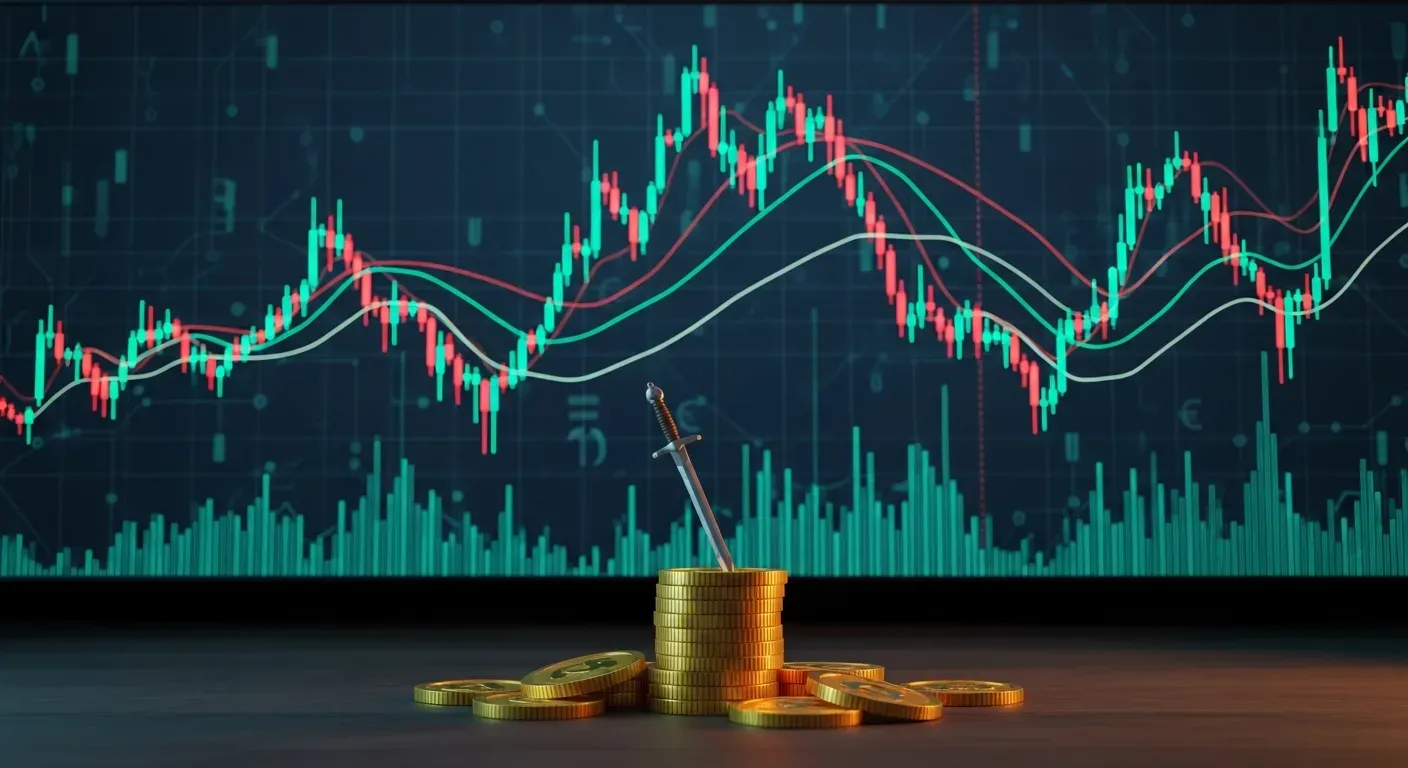
Leverage in trading is a powerful tool, allowing traders to control larger positions with a relatively small amount of capital. It's essentially borrowed capital provided by your broker to amplify your trading power. For instance, with 1:100 leverage, a $1,000 account can control a $100,000 position. This amplification makes forex and CFD markets accessible and attractive, offering the potential for significant profits from small market movements. However, this same magnification applies to losses, making judicious use of leverage absolutely critical to avoid blowing up your trading account. Mastering leverage isn't about shying away from it, but understanding its mechanics, inherent risks, and how to integrate it into a robust risk management strategy. In 2026, with market volatility ever-present and advanced trading tools available, responsible leverage is more important than ever.
Understanding Leverage Ratios and Margin
To truly grasp leverage, we must first understand its core components: the leverage ratio and margin. The leverage ratio is expressed as 1:X, where X represents the multiple by which your capital is amplified. A 1:30 leverage means that for every $1 of your capital, you can control $30 worth of the underlying asset. Many brokers offer various leverage options, from conservative 1:10 to aggressive 1:500 or even higher, depending on regulation and asset class.
Margin, on the other hand, is the actual amount of your capital that a broker sets aside to open and maintain a leveraged position. It's not a fee but a deposit. For example, with 1:100 leverage, to open a $100,000 position, you'd need $1,000 in margin (1% of the position size).
Here's how it breaks down:
- Initial Margin: The capital required to open a new position.
- Maintenance Margin: The minimum equity (account balance + unrealized profit/loss) required to keep an open position.
- Margin Call: If your account equity falls below the maintenance margin level, your broker will issue a margin call, requesting you to deposit more funds or close positions. If you don't, the broker will automatically close some or all of your positions to prevent further losses, a process known as a stop-out. This is precisely how accounts get "blown up."
⚡ Featured Brokers


Let's illustrate with a simple example:
| Account Equity | Leverage | Position Size (Max) | Margin Required (1:100) | Margin Required (1:500) |
|---|---|---|---|---|
| $1,000 | 1:100 | $100,000 | $1,000 | $200 |
| $1,000 | 1:500 | $500,000 | $1,000 (20% of equity) | $1,000 (100% of equity) |
As you can see, higher leverage means less margin is required to open a position, making it tempting to open larger trades. But just because you can control a $500,000 position with $1,000 using 1:500 leverage, it doesn't mean you should. This is where most traders fail.
The Perils of Excessive Leverage: Why Accounts Blow Up
The number one reason accounts get decimated isn't market manipulation or bad luck; it's almost always related to the misuse of leverage. The allure of high leverage is undeniable: the promise of turning a small sum into a fortune quickly. However, this often leads to a few critical errors:
- Emotional Trading and Overconfidence: High leverage amplifies emotions. A small profit feels exhilarating, leading to overconfidence and larger, riskier trades. A small loss, equally magnified, can induce panic, leading to irrational decisions or "revenge trading." This psychological trap is a primary account killer.
- Lack of Stop-Loss Orders: Trading without a predetermined stop-loss on a leveraged position is pure recklessness. A small, unexpected market swing against your position can wipe out a significant portion of your capital, or even trigger a margin call, before you can react. Responsible trading demands that you know your maximum acceptable loss before entering a trade.
- Over-Sizing Positions: This is the most common mistake. Traders see high leverage available (e.g., 1:500) and immediately use all their available margin to open the largest possible position. They might risk 50% or even 100% of their account on a single trade. Even a tiny unfavorable move will lead to a margin call. With FP Markets, you can access competitive leverage, but it’s paramount to use it judiciously.
- Underestimating Volatility: Markets are dynamic. Geopolitical events, economic data releases, or central bank announcements can cause sudden and sharp price movements. If you're highly leveraged and the market moves against you, there might be no time to adjust. The year 2026, for example, is fraught with The Geopolitical Chessboard of 2026: How US-China Tensions and Global Conflicts are Reshaping Forex Markets and Why Central Banks Are on the Brink: The Global Rate Cut Dilemma of 2026, all of which can spike volatility.
- The Illusion of 'Cheap' Capital: While leverage allows you to control a large position without tying up much of your capital, it doesn't reduce the risk associated with that large position. The risk profile remains that of the full position size, not just your margin.
Smart Leverage: Principles of Responsible Use
The key to surviving and thriving with leverage lies in a disciplined approach to risk management, not in avoiding leverage altogether. Here are the core principles:
Position Sizing is King
This is arguably the single most important aspect of using leverage responsibly. Your position size should always be determined by your risk tolerance and account equity, not by the maximum leverage your broker offers.
- The 1% or 2% Rule: A golden rule in trading. Never risk more than 1% to 2% of your total trading capital on any single trade. If you have a $10,000 account, a 1% risk means you should only be prepared to lose $100 on one trade.
- Calculate Based on Stop-Loss: Determine your stop-loss distance (in pips) before you enter a trade. Then, calculate your position size such that if your stop-loss is hit, you only lose your predefined 1% or 2% of capital.
- Example: You have a $10,000 account. You want to risk 1% ($100). You're trading EUR/USD, and your stop-loss is 20 pips away. If one standard lot ($100,000) means a $10 loss per pip, then a 20-pip loss is $200. This is too much. You would instead trade 0.5 standard lots (or 5 mini lots), where a 20-pip loss equals $100. Your broker might offer 1:500 leverage, allowing you to open 5 standard lots, but your risk management dictates you only open 0.5.
Strict Risk Management
Responsible leverage usage is inseparable from robust risk management.
- Stop-Loss Orders Are Non-Negotiable: As mentioned, always place a stop-loss order. It's your ultimate insurance policy. Without it, one volatile spike can decimate your capital. Consider using advanced stop-loss strategies, like trailing stops, once a trade moves favorably.
- Risk-to-Reward Ratios: Aim for trades where the potential profit (reward) is at least twice, preferably three times, your potential loss (risk). A 1:2 or 1:3 risk-to-reward ratio means that even if you only win 50% of your trades, you can still be profitable.
- Diversification: Don't put all your eggs in one basket. Spread your risk across different currency pairs or asset classes. However, avoid over-diversifying to the point where you can't properly monitor all your positions.
- SVX Strategies places immense importance on systematic risk management, particularly when dealing with leveraged positions in markets like Gold (XAUUSD). Our advanced algorithms are designed to dynamically adjust position sizes and risk parameters based on real-time market volatility and predefined risk tolerance, safeguarding capital while optimizing for opportunity. This systematic approach is critical for navigating the inherent Advanced Options Strategies: Profiting from Volatility in 2026.
Understanding Volatility
Leverage and volatility are a potent mix. In high-volatility environments, prices can move rapidly and unpredictably. If you're highly leveraged in such conditions, your stop-loss might be hit quickly, or slippage could cause you to exit at an even worse price than intended. Conversely, low volatility can make it difficult to achieve your profit targets, leading traders to increase leverage to compensate, which is a dangerous path. Always factor in current and potential future volatility when planning a leveraged trade.
Psychology of Leverage
The psychological impact of leverage cannot be overstated. The magnified profits and losses can lead to intense emotional swings. Greed pushes traders to over-leverage, while fear can cause premature exits or paralysis. A detached, analytical mindset is crucial. Trading is a game of probabilities, and even the best setups can fail. Focus on consistent application of your strategy and risk rules rather than chasing every big win. For more on maintaining mental wellness in trading, refer to The Digital Trading Landscape: AI, Screen Time, and Trader Mental Wellness.
Practical Application: A Step-by-Step Guide
Here’s a disciplined process for incorporating leverage into your trading:
- Define Your Risk Capital: Before anything else, determine how much capital you can afford to lose without impacting your lifestyle or financial stability. This is your trading capital, and you should treat any loss within this capital as a business expense.
- Choose Your Broker Wisely: Select a reputable, regulated broker that offers competitive spreads, reliable execution, and appropriate leverage options for your region. Consider a broker like FP Markets for their strong regulatory standing and range of platforms. Also, check their margin call policies and negative balance protection.
- Analyze and Plan Your Trade:
- Market Analysis: Use technical and fundamental analysis to identify potential trade setups.
- Entry Point: Where will you enter the market?
- Exit Point (Take Profit): Where will you aim to close for profit?
- Stop-Loss Point: The critical level where you will exit if the trade goes against you, limiting your loss.
- Calculate Your Position Size (Crucial Step):
- Determine the dollar amount you are willing to risk on this specific trade (e.g., 1% of your account).
- Measure the distance from your entry to your stop-loss in pips.
- Use a position size calculator (many online tools or built into trading platforms) to determine the appropriate lot size (standard, mini, micro) that aligns with your dollar risk and stop-loss distance.
- Crucially: Do not adjust your stop-loss to fit a larger position size. Adjust the position size to fit your stop-loss and risk limit.
- Execute with Discipline: Enter the trade, immediately place your stop-loss and take-profit orders. Once the trade is active, resist the urge to move your stop-loss further away if the market moves against you. Stick to your plan.
Advanced Strategies and Tools for Managing Leverage
For traders looking to refine their approach, several tools and strategies can enhance leverage management:
- Algorithmic Trading (EAs): Expert Advisors (EAs) or trading bots can automate position sizing, stop-loss placement, and trade execution based on predefined rules. This eliminates emotional biases and ensures consistent risk management. For those interested in this domain, RoboForex offers excellent MetaTrader platforms compatible with EAs. At SVX Strategies , we leverage advanced data science and machine learning to build proprietary algorithms that manage risk and capital allocation with precision, particularly in high-frequency and highly leveraged environments. This includes dynamic leverage adjustment based on market conditions. For a deeper dive, explore .
- VPS for EAs: If you're running EAs, a Virtual Private Server (VPS) ensures your trading platform is online 24/7, even if your personal computer is off, guaranteeing uninterrupted execution of your automated risk management.
- Understanding Rollover/Swap Costs: When holding leveraged positions overnight, brokers charge or pay "swap fees." These are interest rate differentials between the two currencies in a pair. For long-term leveraged trades, these costs can accumulate and impact profitability. Be aware of them.
Leverage Across Different Asset Classes
While often associated with Forex, leverage is available for various CFDs (Contracts for Difference):
- Forex: Typically offers the highest leverage due to its liquidity and relatively lower volatility compared to other markets on an absolute percentage basis. Ratios like 1:200 to 1:500 are common outside of strict regulatory zones.
- Indices: Leverage on stock indices like the S&P 500 or DAX is generally lower than forex, often in the range of 1:20 to 1:100.
- Commodities: Products like Gold (XAUUSD) and Oil (WTI/Brent) usually have leverage ratios between 1:20 and 1:100.
- Cryptocurrencies: Due to extreme volatility, leverage on crypto CFDs is significantly lower, often 1:2 to 1:10, depending on the broker and jurisdiction.
Always check the specific leverage offered by your broker for each asset class before trading. Brokers like Fusion Markets offer a wide range of CFDs with varying leverage options, making it essential to understand the terms for each instrument.
Choosing a Broker with Optimal Leverage and Conditions
Your choice of broker plays a significant role in your ability to manage leverage effectively.
- Regulation and Safety: Always choose a broker regulated by a reputable authority (e.g., FCA, ASIC, CySEC). This ensures your funds are segregated and you have recourse in case of disputes. Regulated brokers also often have leverage restrictions (e.g., 1:30 for retail forex in Europe) which, while limiting profit potential, also significantly reduce risk of total account loss.
- Spreads and Commissions: Lower trading costs mean more room for error, especially with leveraged positions. Compare spreads, commissions, and swap fees across brokers.
- Platform Reliability: A stable and fast trading platform (like MetaTrader 4 or 5 offered by Eightcap ) is crucial for timely execution, especially when managing leveraged trades where every pip counts.
- Customer Support: Responsive customer support can be invaluable if you encounter technical issues or have questions about margin calls.
- Negative Balance Protection: This is a vital feature for leveraged trading. It ensures you cannot lose more than your deposited capital, preventing your account balance from going into negative territory. Most regulated brokers offer this.
In conclusion, leverage is neither inherently good nor bad; it is a tool. In the hands of a disciplined trader with a robust risk management plan, it can significantly enhance returns. In the hands of an undisciplined trader, it is a fast track to ruin. Approach it with respect, understand its mechanisms, and prioritize capital preservation above all else. Remember, your primary goal is to stay in the game, and responsible leverage is fundamental to that objective.
Frequently Asked Questions
What is leverage in forex trading?
Leverage in forex trading is a facility provided by brokers that allows you to open positions larger than your actual account capital. It's expressed as a ratio, like 1:100, meaning you can control $100,000 worth of currency with just $1,000 of your own capital (margin).
How can high leverage blow up an account quickly?
High leverage magnifies both potential profits and losses. If you open a large position with high leverage and the market moves even slightly against you, the magnified loss can quickly deplete your account equity, triggering a margin call and automatic closure of your positions (stop-out).
What is a good leverage ratio to use?
There isn't a single "good" leverage ratio, as it depends on your trading strategy, risk tolerance, and position sizing. Many experienced traders advocate for using low effective leverage (e.g., 1:10 or 1:20) even if their broker offers higher ratios, by carefully controlling their position size to risk only 1-2% of their capital per trade.
What is the difference between margin and leverage?
Leverage is the ratio that amplifies your trading power (e.g., 1:100). Margin is the actual amount of capital from your account that is set aside by the broker to open and maintain a leveraged position. It's a deposit, not a cost.
Does leverage reduce my trading costs?
No, leverage does not reduce your trading costs. It only reduces the initial capital required to open a large position. Transaction costs (spreads, commissions, swaps) are still calculated based on the full value of the leveraged position, not just your margin.
How can I calculate my position size to manage leverage risk?
To manage leverage risk, always determine your position size based on your stop-loss and the percentage of your account you're willing to risk (e.g., 1-2%). Measure the pip distance to your stop-loss, calculate the dollar value of that pip movement for different lot sizes, and then choose the lot size that keeps your potential loss within your predefined risk percentage.
Is negative balance protection important for leveraged trading?
Yes, negative balance protection is extremely important for leveraged trading. It ensures that your losses cannot exceed your account balance, preventing your account from going into debt. Most regulated brokers offer this feature.
Disclaimer: Content for educational purposes only. Not financial advice. Trading carries high risk. Past performance of SVX or any system does not guarantee future results.
📡 FBC Ecosystem:
This analysis is just one piece of the puzzle.
- For tactical execution: Follow X (Twitter)
- For the morning briefing: Join Telegram


.webp)