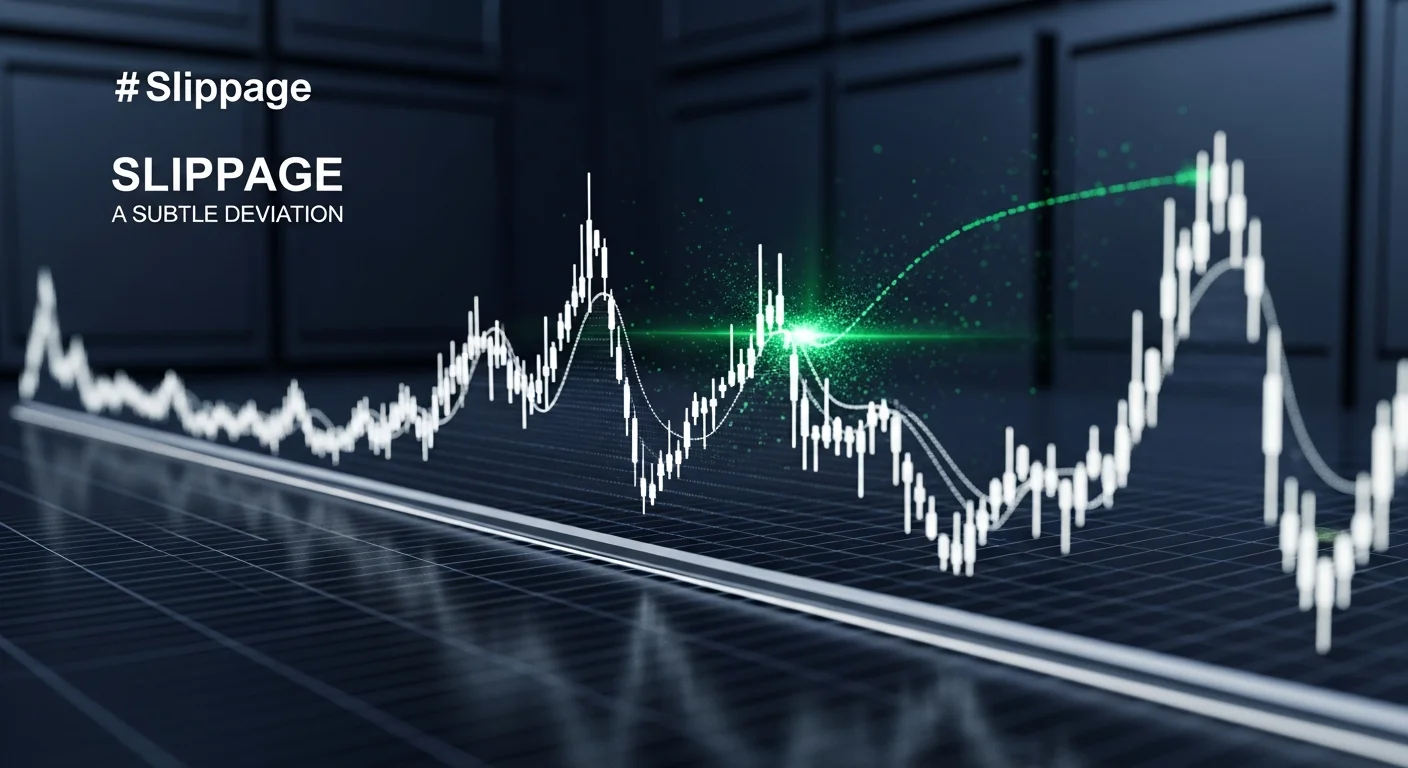
Understanding the difference between limit orders and market orders is not just fundamental; it's the bedrock of effective trade execution, especially in the turbulent waters of volatile markets. As a retail trader in 2026, navigating rapid price swings and unexpected news requires a precise approach to entering and exiting positions. A market order prioritizes speed, executing immediately at the best available price, while a limit order prioritizes price, ensuring your trade is filled only at or better than your specified level. Choosing the right order type can significantly impact your profitability, minimize slippage, and protect your capital from adverse moves. This masterclass will dissect these critical order types, providing you with the keys to superior execution.
Market Orders: Prioritizing Speed at Any Cost
A market order is the simplest and most direct way to execute a trade. When you place a market order, you instruct your broker to buy or sell an asset immediately at the best available price in the market. The primary advantage here is speed and certainty of execution – your order will almost certainly be filled, provided there is liquidity.
How Market Orders Work:
When you hit "buy" or "sell" with a market order, your broker sends this instruction to the market. The order is then matched against the best available opposing orders in the order book. For a buy market order, it will fill against the lowest available ask price; for a sell market order, it will fill against the highest available bid price.
Advantages of Market Orders:
- Immediate Execution: Your trade gets filled almost instantly, which is crucial when you need to enter or exit a position right away to capitalize on a sudden price movement or mitigate a rapidly escalating loss.
- Certainty of Fill: As long as there's liquidity, your market order will be executed. This is particularly useful in fast-moving markets where hesitation can mean missing an opportunity.
⚡ Featured Brokers


Disadvantages of Market Orders:
- Price Uncertainty (Slippage): This is the biggest drawback, especially in volatile markets. The price at which your order is executed might differ from the price you saw when you placed the order. This "slippage" can be negative, meaning you get a worse price than anticipated, or positive, though positive slippage is less common for market orders in fast markets. For instance, if you want to buy EUR/USD at 1.0850 with a market order during a news release, you might end up buying at 1.0855 or even higher if prices are surging.
- Costly in Illiquid Markets: In markets with low trading volume or wide bid-ask spreads, market orders can be very expensive due to significant slippage. The lack of available opposing orders at your desired price forces your order to "walk up" or "walk down" the order book, potentially filling at multiple, increasingly worse prices.
Market orders are best reserved for situations where immediate entry or exit is paramount, and the potential for slippage is acceptable given the urgency. However, I am of the firm opinion that relying solely on market orders in volatile conditions is reckless. You are essentially giving up control over your entry or exit price, which can erode your capital swiftly.
Limit Orders: Prioritizing Price Control
A limit order is a more sophisticated instruction that gives you control over the price at which your trade is executed. With a limit order, you specify the maximum price you're willing to pay for a buy (buy limit order) or the minimum price you're willing to accept for a sell (sell limit order).
How Limit Orders Work:
- Buy Limit Order: Placed below the current market price. It will only execute if the market price falls to your specified limit price or lower.
- Sell Limit Order: Placed above the current market price. It will only execute if the market price rises to your specified limit price or higher.
The order will remain in the order book until it's filled or canceled (or expires, depending on its time in force).
Advantages of Limit Orders:
- Price Certainty: You are guaranteed to get your specified price or better. This eliminates negative slippage.
- Cost-Effective in Volatile Markets: By waiting for your desired price, you can avoid unfavorable fills that might occur with market orders during periods of high volatility. This is particularly valuable for scalpers or traders looking to pick specific price levels.
- Passive Trading: Limit orders allow you to set up trades and let the market come to you, reducing the need for constant screen monitoring. This is a form of automation that many find beneficial, especially when combined with algorithmic strategies. This passive approach aligns well with systems like SVX Strategies , which can use precise limit orders to enter and exit positions based on predefined conditions, optimizing entries and exits without emotional interference.
Disadvantages of Limit Orders:
- Uncertainty of Fill: There's no guarantee your limit order will be executed. If the market never reaches your specified price, your order will simply remain unfilled.
- Missed Opportunities: In fast-moving markets, the price might quickly move past your limit without filling, causing you to miss out on a profitable trade.
- Requires Patience: You might have to wait for an extended period for your order to be filled.
Limit orders are the tool of choice for traders who prioritize price accuracy and are willing to sacrifice immediate execution for it. They are excellent for strategic entries, profit-taking, and even initiating stop-loss orders in a controlled manner.
Limit Orders vs. Market Orders: Key Differences and When to Use Each
The fundamental difference lies in priority: market orders prioritize speed and certainty of execution, while limit orders prioritize price control.
Let's illustrate with a table:
| Feature | Market Order | Limit Order |
|---|---|---|
| Execution | Immediate, at current market price | Only at specified price or better, if price is met |
| Price | Uncertain (subject to slippage) | Guaranteed at or better than specified price |
| Fill Rate | High certainty of fill | Uncertainty of fill |
| Use Case | Urgent entry/exit, high conviction, closing positions quickly | Strategic entry/exit, price discovery, avoiding slippage, profit taking |
| Volatile Market | High risk of negative slippage | Controls entry/exit price, but may not fill |
| Trader Type | Day traders, momentum traders (sometimes), urgent needs | Scalpers, swing traders, algorithmic traders, long-term investors |
When to use a Market Order:
- You need to get into or out of a trade immediately, regardless of minor price fluctuations.
- You are certain of the trade's direction and are more concerned with participating than with picking the absolute best price.
- You are closing out a losing position to prevent further losses and prioritize exit speed.
When to use a Limit Order:
- You have a specific price in mind for entry or exit and are unwilling to deviate.
- You want to avoid slippage, especially in thinly traded or highly volatile markets.
- You are placing a take-profit order to lock in gains at a predefined level.
- You are attempting to "fade" a strong move, buying on a dip or selling into a rally.
- You employ an automated strategy where precise entry and exit points are crucial for profitability, similar to the precision offered by SVX Strategies for optimized execution.
Consider using a trusted broker like FP Markets or IC Markets , known for their competitive spreads and robust execution, which can further enhance your order placement strategies.
Advanced Order Types: Stop Orders and Stop Limit Orders
While market and limit orders are fundamental, understanding stop orders and stop-limit orders is crucial for risk management and protecting capital, particularly in unpredictable markets.
Stop Order (Stop Market Order)
A stop order, or more accurately a stop market order, becomes a market order once a specified "stop price" is reached or breached.
How Stop Orders Work:
- Buy Stop Order: Placed above the current market price. When the market price rises to or above the stop price, it triggers a market order to buy. Used to limit losses on a short position or to enter a long position once a resistance level is broken.
- Sell Stop Order: Placed below the current market price. When the market price falls to or below the stop price, it triggers a market order to sell. Most commonly used as a stop-loss to limit losses on a long position.
Example of a Sell Stop Order:
Suppose you bought EUR/USD at 1.0800 and the current price is 1.0820. You want to limit your loss to 20 pips, so you place a sell stop order at 1.0780. If the price falls to 1.0780, your stop order activates and becomes a market order to sell. The execution, however, will be at the best available price after 1.0780 is hit, which might be lower than 1.0780 due to slippage in a fast-moving market.
Challenges with Stop Market Orders in Volatile Markets:
The major issue here is the same as with a regular market order: slippage. In volatile markets, a stop price can be breached very quickly, and your resulting market order might fill significantly worse than your stop price. This is why many traders, especially those who understand the intricacies of risk management, opt for stop-limit orders. For more on protecting your capital, refer to The Forgotten Pillar: Why Risk Management is Your Best Defense in Agitated Markets of 2026.
Stop Limit Order
A stop-limit order combines features of both stop orders and limit orders, offering more control over the execution price once a stop is triggered.
How Stop Limit Orders Work:
A stop-limit order has two prices: a stop price and a limit price.
- When the market price reaches or crosses the stop price, the order is activated and becomes a limit order.
- This limit order will then only execute at your specified limit price or better.
Example of a Sell Stop Limit Order:
Let's revisit the EUR/USD example. You bought at 1.0800, current price 1.0820. You want to limit loss to 20 pips, but also want to control the exit price. You place a sell stop-limit order with a stop price of 1.0780 and a limit price of 1.0775.
- If the price falls to 1.0780, the order activates, becoming a sell limit order at 1.0775.
- Your order will only be filled if the market price is 1.0775 or higher (better for you).
- If the price gaps down aggressively past 1.0775 (e.g., to 1.0770), your limit order at 1.0775 might not be filled, leaving you with an open position.
Advantages of Stop Limit Orders:
- Controlled Exit Price: Provides more certainty over the price you will exit at, preventing excessive slippage.
- Ideal for Less Volatile Exits: Can be effective in markets where price movements are more orderly after a stop is hit.
Disadvantages of Stop Limit Orders:
- No Guarantee of Fill: If the market moves too quickly past your limit price after the stop is triggered, your order may not be filled, leaving you exposed to further losses. This is the major risk compared to a stop market order.
- Complexity: Requires careful consideration of both stop and limit prices.
Choosing between a stop market and a stop-limit order boils down to a trade-off: certainty of exit vs. certainty of price. In extremely volatile markets, a stop-limit order might prevent a horrible fill but could also lead to a missed exit, leaving you holding a rapidly depreciating asset. I personally prefer the certainty of an exit in my stop-loss strategy, which sometimes means accepting a degree of slippage. However, for profit-taking or less urgent entries, a stop-limit order can be an excellent choice.
Many brokers like RoboForex and XM offer these advanced order types across their MetaTrader 4 and MetaTrader 5 platforms, allowing traders to implement sophisticated strategies.
Strategies for Superior Execution in Volatile Markets
Volatile markets, while challenging, offer immense opportunities for those who master order execution. Here are some strategies:
- Understand Your Risk Tolerance: Before placing any order, especially in volatility, define your maximum acceptable loss. This directly informs your stop-loss placement.
- Combine Order Types: Don't limit yourself to one type. Use limit orders for precise entries at key support/resistance levels, and market orders for urgent exits when volatility spirals.
- Utilize Stop-Limit Orders for Profit-Taking: Instead of a simple sell limit for profit, consider a buy stop-limit order on a short position or a sell stop-limit order on a long position if you anticipate a quick reversal after a price spike. This can protect against overshooting your target.
- Scaling In/Out with Limit Orders: In volatile conditions, you might want to scale into a position using multiple smaller limit orders at varying price levels. This averages your entry price and reduces the impact of any single adverse fill. The same applies to scaling out of positions.
- Be Aware of News Events: Anticipate increased volatility around major economic data releases or geopolitical events. During these times, spreads widen, and slippage is common. Consider pausing market orders and using wider-range limit orders or sitting on the sidelines if you're not comfortable with the risk.
- Backtest Your Strategies: Use historical data to see how your chosen order types would have performed during past volatile periods. Algorithmic trading systems, like those powered by SVX Strategies , are specifically designed to backtest and optimize order execution under various market conditions, removing emotional biases.
- Choose a Broker with Excellent Execution: Low latency, tight spreads, and reliable execution are paramount. Brokers like Pepperstone and Eightcap are often cited for their competitive execution and advanced trading platforms.
- Practice on a Demo Account: Before deploying real capital in volatile markets, practice your order placement strategies on a demo account. This helps build muscle memory and confidence without financial risk.
The Human Element in Algorithmic Times
Even with sophisticated algorithms and AI-powered trading in 2026, the human element of understanding and strategically deploying order types remains critical. While systems like SVX Strategies can automate the process of placing complex orders, the decision of which order type to use and at what price often originates from a trader's analysis and risk appetite. The future of forex trading relies on a synergy between advanced technology and informed human decision-making. You can explore more about this synergy in The AI & Algorithmic Revolution: A Retail Trader's Guide to Forex in 2026.
Ignoring the nuances of market and limit orders is akin to building a house without a solid foundation. In volatile markets, this foundation is tested rigorously, and poor execution can lead to significant losses. Take the time to master these tools, and you will find yourself better equipped to navigate the complexities of online trading. For comprehensive broker insights, don't forget to check our detailed broker reviews, such as , to ensure you're trading with a reliable partner.
Frequently Asked Questions
What is the primary difference between a limit order and a market order?
The primary difference lies in priority. A market order prioritizes immediate execution at the current best available price, accepting potential slippage. A limit order prioritizes price control, guaranteeing execution at or better than your specified price, but with no guarantee of fill if the market doesn't reach that level.
When should a retail trader use a market order?
A retail trader should use a market order when immediate entry or exit from a trade is critical, and the certainty of execution outweighs concerns about potential price slippage. This might be to capitalize on rapidly developing news or to quickly cut losses.
What is a sell limit order example?
If the current price of Gold (XAUUSD) is $2100, and you believe it will briefly touch $2110 before falling, you could place a sell limit order at $2110. Your order would only execute if the price reaches $2110 or higher.
How does a stop-limit order help in volatile markets compared to a simple stop order?
A stop-limit order provides more control over the exit price by becoming a limit order once the stop price is triggered. This helps prevent excessive slippage that a standard stop (market) order might incur in a fast-moving volatile market. However, the trade-off is that the limit order might not fill if the market gaps past your limit price.
What are the main risks of using market orders in highly volatile conditions?
The main risk is significant negative slippage. In highly volatile conditions, the price can move rapidly between the time you place a market order and when it's actually executed, resulting in a fill price that is considerably worse than anticipated.
Can I place a buy limit order above the current market price?
No, a buy limit order must be placed below the current market price to ensure you buy at a lower, more favorable price. If you want to buy when the price rises to a certain level, you would typically use a buy stop order or a buy stop-limit order.
Why is it important to choose a reliable broker for order execution?
A reliable broker ensures low latency, tight spreads, and robust infrastructure, all of which contribute to better order execution. This minimizes slippage on market orders and improves the chances of limit orders being filled at your desired price, which is crucial for overall profitability, especially in fast markets.
Disclaimer: Content for educational purposes only. Not financial advice. Trading carries high risk. Past performance of SVX or any system does not guarantee future results.
📡 FBC Ecosystem:
This analysis is just one piece of the puzzle.
- For tactical execution: Follow X (Twitter)
- For the morning briefing: Join Telegram
.webp)