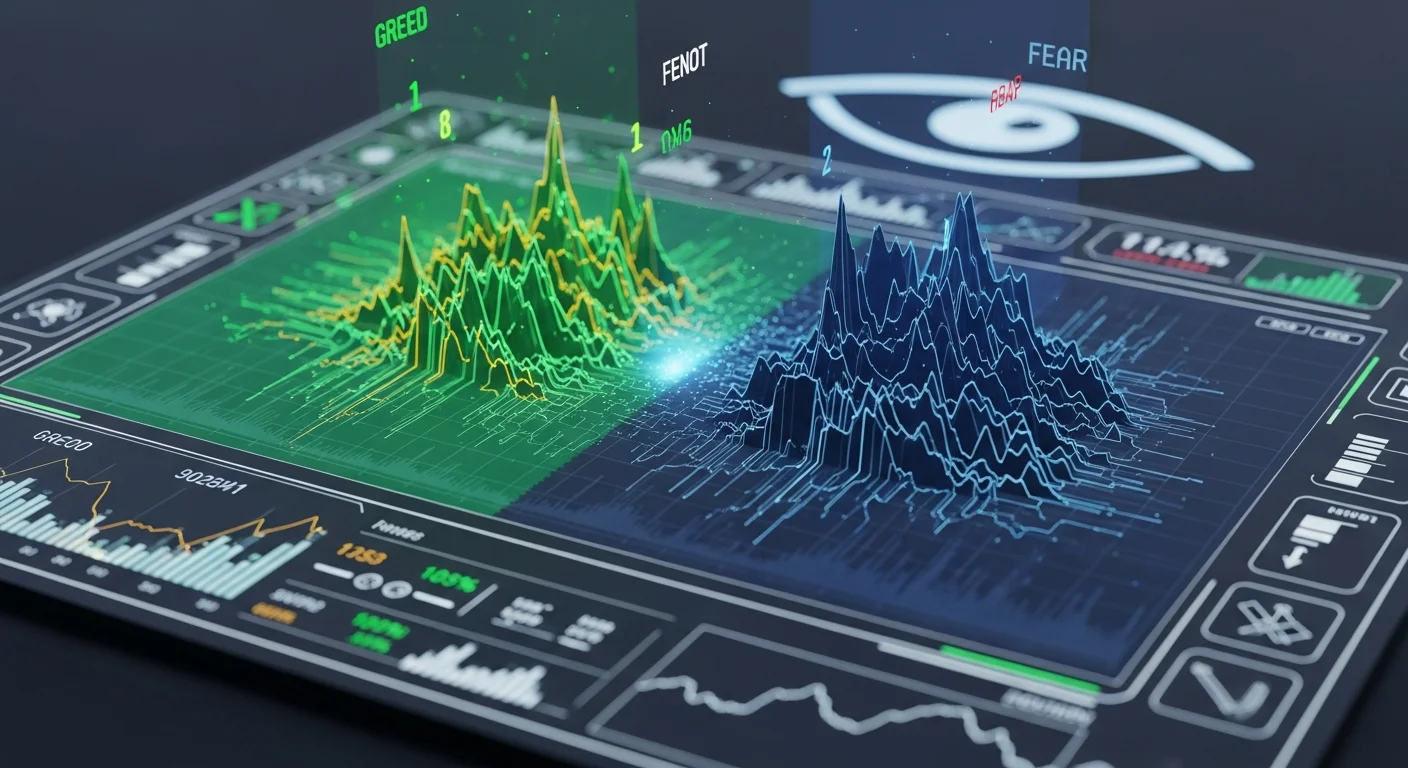
The concept of global macro trading has seen a profound resurgence in 2026, marking what I call the "Global Macro Renaissance." This isn't just a fleeting trend; it's a fundamental shift driven by a confluence of economic, technological, and geopolitical forces. Global macro strategy involves making investment decisions based on large-scale economic and political events, aiming to profit from major shifts in interest rates, currencies, commodities, and equity markets across the globe. A global macro hedge fund exemplifies this approach, often employing significant leverage and a broad mandate to trade diverse asset classes. In 2026, understanding global macro indicators and crafting a robust global macro strategy is more critical than ever, moving beyond traditional frameworks to embrace new data streams and analytical methods.
Why Global Macro is Different in 2026
The market environment of 2026 is uniquely complex, demanding a global macro perspective more than ever before. We're past the era of persistently low interest rates and predictable quantitative easing. The playbooks of the last decade are largely obsolete.
Persistent Inflation and Divergent Central Bank Policies
The "transitory" inflation narrative is a distant memory. We're grappling with sticky inflation, driven by structural shifts like de-globalization, energy transition costs, and persistent wage pressures. Central banks worldwide are facing an unprecedented dilemma: how to tame inflation without triggering a deep recession. This has led to highly divergent monetary policies, creating significant opportunities and risks for currency and bond traders. For a deeper dive into this, see Why Central Banks Are on the Brink: The Global Rate Cut Dilemma of 2026. The truth about interest rate divergence, especially concerning the USD, remains a key driver for forex markets.
Geopolitical Fragmentation and Supply Chain Reshaping
Geopolitical tensions are no longer fringe concerns; they are central market drivers. Conflicts, trade disputes, and the race for technological supremacy are reshaping global supply chains, leading to commodity price volatility and localized inflation spikes. This fragmentation means a truly global perspective is essential, as events in one corner of the world can have ripple effects across multiple asset classes.
⚡ Featured Brokers


The Accelerating AI Revolution and Its Economic Impact
Artificial intelligence is not just transforming industries; it's reshaping economic productivity, labor markets, and even geopolitical power dynamics. The rapid adoption of AI is creating new investment themes, disrupting established sectors, and influencing capital flows. Traders must integrate the AI narrative into their macro analysis, considering which economies and companies are best positioned to capitalize on this technological leap. Our algorithmic trading arm, SVX Strategies , constantly monitors these technological shifts to identify emerging alpha opportunities through data-driven models.
New Frameworks for Global Macro Trading
To succeed in this environment, a modern global macro trader needs new frameworks that go beyond traditional economic calendars and technical analysis. This is where data science meets market intuition.
Beyond Traditional Economic Indicators
While GDP, CPI, and employment figures remain crucial, they are lagging indicators. Successful global macro trading in 2026 requires predictive power derived from real-time and alternative data.
- High-Frequency Data: Tracking credit card spending, foot traffic, freight movements, and energy consumption provides a more immediate pulse on economic activity.
- Satellite Imagery: Monitoring agricultural yields, factory output, and commodity stockpiles.
- Social Media Sentiment: Analyzing public mood and discussions around specific assets, sectors, or economic policies can offer early signals, as detailed in The Digital Herd: How Emotional Contagion on Social Media Drives Market Cycles in 2026.
- Supply Chain Analytics: Leveraging data from logistics networks to identify potential bottlenecks or surpluses before they hit traditional economic reports.
The Rise of AI-Powered Macro Models
The integration of machine learning and artificial intelligence is fundamental to the "Global Macro Renaissance." These tools allow traders to process vast datasets, identify complex non-linear relationships, and generate predictive signals that human analysts alone cannot. For a comprehensive guide, see The Ultimate AI Investing Playbook for 2026: Machine Learning Strategies to Master.
Key AI Applications in Global Macro:
- Predictive Analytics: Forecasting macroeconomic variables (inflation, growth) with greater accuracy by incorporating alternative data.
- Sentiment Analysis: Quantifying market sentiment from news, social media, and earnings call transcripts.
- Pattern Recognition: Identifying recurring market patterns or anomalies across diverse asset classes.
- Automated Strategy Execution: Algorithms can execute trades based on macro signals with precision and speed, reducing emotional bias and maximizing efficiency. Our work at SVX Strategies heavily relies on these automated systems for robust performance and disciplined risk management.
The Interconnectedness of Asset Classes
A true global macro strategy views the markets as a single, interconnected ecosystem. Understanding the relationships between currencies, fixed income, equities, and commodities is paramount.
- Gold (XAUUSD) as a Macro Barometer: Gold's role as a safe haven, inflation hedge, and alternative currency makes it a critical global macro indicator. Its movements often signal shifts in risk appetite, real interest rates, and geopolitical stability.
- Bond Market Signals: Yield curve inversions, real yields, and inflation-indexed bond performance offer profound insights into future economic growth and inflation expectations.
- Currency as a Policy Reflection: Forex markets are direct reflections of central bank policies, economic health, and capital flows. Predicting currency movements often involves anticipating policy divergences, as discussed in The Truth About Interest Rate Divergence and USD Weakness in 2026.
Volatility as an Asset Class
In 2026's uncertain landscape, volatility itself is a tradable asset. Advanced options strategies are no longer niche; they are essential for expressing macro views and hedging portfolios. Understanding how to buy or sell volatility, implement complex spreads, and profit from expected or unexpected market swings is a core component of modern macro trading. For more on this, check out Advanced Options Strategies: Profiting from Volatility in 2026.
Crafting a Modern Global Macro Strategy
Building a successful global macro strategy requires a blend of top-down macroeconomic analysis and bottom-up data-driven insights. Here's how to structure your approach:
- Macro Thesis Development:
- Identify key global themes (e.g., deglobalization, energy transition, AI adoption, demographic shifts).
- Formulate specific hypotheses about how these themes will impact currencies, interest rates, commodities, and equities.
- Example: A thesis of persistent inflation might lead to long commodity positions, short bonds, and a preference for value stocks over growth.
- Indicator Selection and Model Building:
- Curate a diverse set of traditional and alternative global macro indicators.
- Employ machine learning models to identify relationships and generate predictive signals. This is where the prowess of data science truly shines.
- Cross-Asset Implementation:
- Translate macro theses into specific trades across different asset classes.
- Consider correlations and diversification. A trade should make sense not just in isolation, but also within the context of your broader portfolio.
- Dynamic Risk Management:
- This is non-negotiable. Trading without a clear risk management framework is simply reckless, especially with the leverage often employed in global macro. Our institutional discipline at SVX Strategies prioritizes stringent risk parameters, position sizing, and stop-loss management to protect capital.
- Understand the leverage you are using. For a comprehensive look at how to manage it responsibly, read Leverage: How to Use It Without Blowing Your Account.
Illustrative Global Macro Indicators & Their Application
| Indicator Category | Specific Indicator | Relevance in 2026 | Macro Thesis Example |
|---|---|---|---|
| Monetary Policy | Real Interest Rate Differential (e.g., US vs. EU) | Predicts currency strength/weakness, capital flows. | USD strength vs. EUR if US real rates rise faster due to sticky inflation. |
| Inflation | Market-based Inflation Expectations (e.g., breakevens) | Early warning for inflation shifts, commodity demand. | Long commodities (e.g., crude oil, copper) if inflation expectations rebound sharply. |
| Growth/Activity | Purchasing Managers' Index (PMI) | Short-term economic health, manufacturing/services. | Short equity indices if PMI consistently signals contraction across major economies. |
| Geopolitics | Geopolitical Risk Index (e.g., from ACLED) | Impact on safe havens (Gold, JPY) or commodity supply. | Long Gold (XAUUSD) if geopolitical tensions escalate significantly in key regions. |
| Technology/AI | AI Adoption Index (sector-specific) | Identifies growth opportunities, sector rotation. | Long tech-adjacent industrials if AI adoption drives efficiency gains in manufacturing. |
Platforms and Brokers for Global Macro Traders
Executing a sophisticated global macro trading strategy requires a robust trading infrastructure. This means selecting brokers that offer a wide range of instruments, competitive pricing, advanced charting, and support for algorithmic trading.
For retail traders looking to implement global macro ideas, choosing the right broker is critical. I often recommend brokers like FP Markets due to their competitive spreads, diverse asset offerings including forex, commodities, and indices, and excellent MetaTrader 4 and 5 platforms, which are essential for implementing both discretionary and algorithmic strategies. Another strong contender is Fusion Markets , known for its incredibly low costs and efficient execution, particularly beneficial for high-frequency strategies. For those focused on a comprehensive CFD trading experience with access to MT4, MT5, and TradingView, Eightcap is an excellent choice.
The Role of Psychology and Experience
While data and algorithms are paramount, the human element, as exemplified by seasoned macro traders like Greg Gliner, remains vital. Discretionary judgment, derived from years of experience and a deep understanding of market history, helps navigate unforeseen events ("black swans") and interpret signals that even the most advanced AI might miss. The ability to adapt quickly, maintain discipline, and manage stress in highly volatile markets is a skill developed over time. No algorithm can fully replicate this nuanced human intuition and resilience.
Challenges for the Global Macro Trader in 2026
Despite the immense opportunities, the global macro landscape of 2026 presents significant challenges:
- Data Overload: The sheer volume of data available can be overwhelming, making it difficult to discern signal from noise.
- Model Risk: Over-reliance on complex models without understanding their limitations can lead to significant losses, especially when market regimes shift unexpectedly.
- Regime Change: Markets are constantly evolving. A strategy that worked last year might fail spectacularly this year. Continuous adaptation and backtesting are crucial.
- Leverage Amplification: While leverage can amplify profits, it also magnifies losses, demanding meticulous risk management.
The Global Macro Renaissance is not just about identifying trends; it's about building resilient, adaptive frameworks that blend quantitative rigor with astute discretionary judgment. For traders willing to embrace this complexity, 2026 offers unparalleled opportunities.
Frequently Asked Questions
What defines a global macro strategy?
A global macro strategy involves making investment decisions based on broad economic and political trends worldwide. Traders seek to profit from major shifts in asset prices (currencies, bonds, equities, commodities) driven by macroeconomic events, central bank policies, and geopolitical developments.
How does AI impact global macro trading in 2026?
AI, particularly machine learning, profoundly impacts global macro trading by enabling the analysis of vast datasets (including alternative data) to identify complex patterns, forecast macroeconomic indicators, and generate predictive signals. It also facilitates automated strategy execution and sentiment analysis.
What are some key global macro indicators to watch in 2026?
Beyond traditional indicators like GDP and CPI, modern global macro traders monitor real interest rate differentials, market-based inflation expectations (e.g., breakevens), high-frequency activity data (e.g., credit card spending), satellite imagery data, and geopolitical risk indices.
Is global macro trading suitable for retail traders?
While historically the domain of large hedge funds, the rise of accessible trading platforms, advanced analytical tools, and copy trading options makes a simplified version of global macro trading more accessible to retail traders. However, it requires a strong understanding of economic principles, risk management, and market interconnections.
What are the main risks associated with global macro trading?
Key risks include high leverage amplifying losses, model risk (when predictive models fail), geopolitical black swan events, unexpected shifts in central bank policies, and the complexity of managing a diverse, globally exposed portfolio. Strict risk management is paramount.
What role does Gold (XAUUSD) play in a global macro strategy?
Gold is often considered a critical global macro indicator and a strategic asset. It acts as a safe haven during geopolitical uncertainty or economic turmoil, an inflation hedge during periods of rising prices, and a reflection of real interest rates and US dollar strength.
How do I choose a broker for global macro trading?
Look for brokers offering a wide range of instruments (Forex, indices, commodities, bonds), competitive spreads, robust execution, and support for advanced trading platforms like MetaTrader 4/5 or cTrader. Access to market research and analytical tools is also beneficial.
Disclaimer: Content for educational purposes only. Not financial advice. Trading carries high risk. Past performance of SVX or any system does not guarantee future results.
📡 FBC Ecosystem:
This analysis is just one piece of the puzzle.
- For tactical execution: Follow X (Twitter)
- For the morning briefing: Join Telegram