.webp)
Forex trading for beginners in 2026 means entering the largest financial market globally, but it's crucial to approach it with a realistic mindset. This guide will provide an honest roadmap to navigate the complexities and opportunities that currency trading presents. It’s not a get-rich-quick scheme; it requires dedication, continuous learning, and robust risk management. As a veteran trader, I can tell you that success in this arena hinges on understanding the fundamentals, controlling your emotions, and developing a solid strategy. The digital landscape of 2026, with its advanced tools and data, offers unprecedented access, but also demands greater discipline from new traders.
What is Forex Trading?
Forex, or Foreign Exchange, is the process of exchanging one currency for another. It's a decentralized global market where all the world's currencies are traded, operating 24 hours a day, five days a week. With daily volumes often exceeding $7 trillion, it dwarfs other financial markets. When you trade Forex, you're essentially speculating on the future value of one currency against another, expressed in currency pairs like EUR/USD or GBP/JPY.
Understanding Currency Pairs
Currency pairs are the core of Forex. The first currency listed is the base currency, and the second is the quote currency. For example, in EUR/USD, the Euro is the base, and the US Dollar is the quote. If EUR/USD is trading at 1.0800, it means 1 Euro can buy 1.0800 US Dollars. You profit when the value of the base currency strengthens relative to the quote currency (if you bought) or weakens (if you sold).
- Major Pairs: Highly liquid, widely traded (e.g., EUR/USD, GBP/USD, USD/JPY).
- Minor Pairs: Less liquid, but still significant, often involving major currencies not paired with the USD (e.g., EUR/GBP, AUD/NZD).
- Exotic Pairs: Least liquid, higher spreads, involves a major currency paired with a currency from a smaller or emerging economy (e.g., USD/TRY, EUR/MXN).
⚡ Featured Brokers


Why Trade Forex in 2026?
Forex trading in the current year offers unique advantages, but also comes with significant pitfalls that beginners must be aware of.
Advantages of Forex Trading
- High Liquidity: The sheer volume of transactions means you can typically enter and exit trades quickly without significant price distortion.
- 24/5 Market: The market never sleeps from Monday morning in Sydney to Friday evening in New York, offering flexibility for traders across different time zones.
- Low Entry Barrier: Many brokers allow you to start with relatively small capital, making it accessible. However, don't confuse accessibility with ease of profit.
- Profit Potential in Any Market: You can profit from both rising and falling markets by going long (buying) or short (selling).
Disadvantages and Risks
- High Volatility: While offering profit opportunities, rapid price swings can lead to significant losses, especially for inexperienced traders.
- Complexity: Numerous economic, political, and social factors influence currency prices, making comprehensive analysis challenging.
- High Leverage Risk: Leverage can amplify gains, but also catastrophic losses, a point I cannot stress enough.
- Psychological Pressure: The fast-paced nature and constant fluctuation can be emotionally taxing, leading to impulsive decisions.
Key Concepts for Beginners
Before placing your first trade, you must grasp these fundamental terms.
Pips, Spreads, and Lots
- Pip (Percentage in Point): The smallest unit of price movement in a currency pair. For most pairs, a pip is the fourth decimal place (e.g., 0.0001). For JPY pairs, it's the second decimal place.
- Spread: The difference between the bid (buy) price and the ask (sell) price. This is how brokers typically make their money, and it's your transaction cost.
- Lot: A standardized unit of currency in Forex. A standard lot is 100,000 units of the base currency, a mini lot is 10,000 units, and a micro lot is 1,000 units. Beginners should always start with micro or mini lots.
Understanding Leverage
Leverage allows you to control a large position with a relatively small amount of capital, known as margin. For example, 1:500 leverage means you can control $500,000 worth of currency with just $1,000 of your own money. While enticing, leverage is a double-edged sword. It can magnify your profits but also your losses exponentially. Trading with high leverage without proper risk management is simply reckless. For a deeper dive, check out Leverage: How to Use It Without Blowing Your Account.
Choosing the Right Broker
Selecting a reputable Forex broker is one of the most critical decisions you'll make. Your broker is your gateway to the market, and a poor choice can derail your entire trading journey.
Key Criteria for Broker Selection
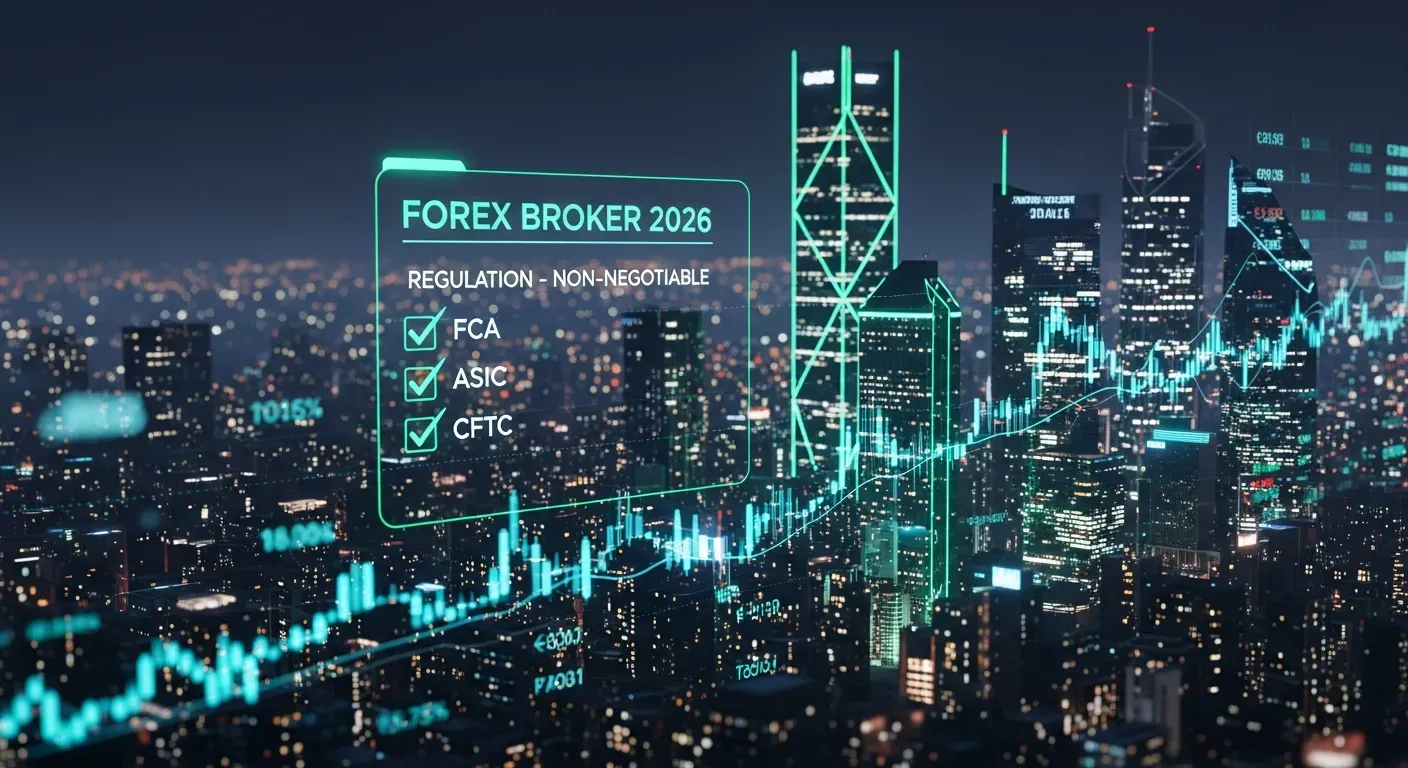
- Regulation: Non-negotiable. Only choose brokers regulated by a top-tier authority (e.g., FCA, ASIC, CySEC). This ensures your funds are segregated and you have recourse in case of disputes.
- Spreads and Commissions: Look for competitive spreads and transparent commission structures. ECN (Electronic Communication Network) brokers generally offer tighter spreads but may charge a commission per trade.
- Trading Platforms: Ensure the broker offers stable, user-friendly platforms like MetaTrader 4 (MT4), MetaTrader 5 (MT5), or cTrader. Our partner broker, FP Markets, for instance, offers robust MT4 and MT5 platforms.
- Customer Support: Responsive and knowledgeable customer support is essential, especially for beginners.
- Asset Offering: While focusing on Forex, ensure they offer the currency pairs you're interested in, and potentially other CFDs.
Recommended Brokers
When you're starting, consider brokers that offer a good balance of regulation, competitive pricing, and excellent support. FP Markets is our esteemed partner, known for its tight spreads and strong regulatory standing. For traders seeking ECN environments and powerful trading capabilities, IC Markets is a solid choice. If you prefer a broker with strong TradingView integration, Eightcap is another excellent option.
| Broker Name | Regulation | Platform Options | Typical Spread (EUR/USD) | Key Features |
|---|---|---|---|---|
| FP Markets | ASIC, CySEC | MT4, MT5 | From 0.0 pips | ECN, Social Trading, excellent support |
| IC Markets | ASIC, CySEC, FSA | MT4, MT5, cTrader | From 0.0 pips | Raw Spreads, high liquidity, automated trading |
| Eightcap | ASIC, SCB | MT4, MT5, TradingView | From 0.0 pips | CFD Trading, Forex, TradingView integration |
Essential Tools and Platforms
Beyond your broker's platform, there are other tools that will become indispensable.
- MetaTrader 4 (MT4) & MetaTrader 5 (MT5): These are industry-standard platforms offering advanced charting, analytical tools, and the ability to use Expert Advisors (EAs) for automated trading.
- TradingView: An incredibly popular web-based charting platform with social features, custom indicators, and real-time data for various markets.
- Economic Calendar: Essential for tracking high-impact news events (e.g., interest rate decisions, inflation reports, NFP) that cause significant volatility.
Developing a Trading Strategy
"Hope is not a strategy." You need a clear, defined plan before you even think about entering the market.
Analysis Methods
- Technical Analysis: Studying past price action, chart patterns, and indicators (moving averages, RSI, MACD) to predict future movements.
- Fundamental Analysis: Examining economic data, geopolitical events, and central bank policies to determine a currency's intrinsic value and future direction.
Risk Management: Your Shield
This is perhaps the most crucial section for any beginner. Trading without a stop loss is simply reckless and will inevitably lead to blowing up your account. Proper risk management means:
- Position Sizing: Never risk more than 1-2% of your total capital on a single trade.
- Stop Loss: A pre-determined price level where your trade will automatically close to limit potential losses. It's your insurance policy.
- Take Profit: A pre-determined price level where your trade will automatically close to lock in profits.
Our algorithmic trading arm, SVX Strategies , emphasizes robust risk models that are essential even for retail traders. Understanding market volatility and managing exposure are core tenets of sustained profitability.
Trading Psychology: The Mental Game
Emotions are the enemy of successful trading. Fear and greed lead to impulsive decisions, over-trading, and deviations from your plan. Cultivate discipline, patience, and emotional control. Understanding trading psychology is paramount; it's a core component even in the sophisticated systems developed by SVX Strategies to mitigate human error.
The Role of Automation
In 2026, algorithmic trading and Expert Advisors (EAs) are more accessible than ever. They can execute trades based on pre-defined rules, removing emotion from the equation. While powerful, they still require monitoring and understanding. For more on this, see AI & Algorithmic Trading for the Retail Trader: Navigating the Future of Forex (2026).
Common Mistakes to Avoid
- Over-leveraging: Using too much leverage can quickly wipe out your account.
- Lack of a Trading Plan: Entering trades without clear entry/exit points and risk parameters is gambling.
- Emotional Trading: Letting fear of missing out (FOMO) or revenge trading dictate your actions.
- Ignoring News and Economic Events: High-impact news can invalidate technical setups in an instant.
- Not Using Stop Losses: This is a death sentence for your capital.
Starting Your Journey: Practical Steps
- Educate Yourself: Continuously learn about market dynamics, technical indicators, and fundamental analysis.
- Open a Demo Account: Practice your strategy, test platforms, and get comfortable with execution without risking real money. Treat it like a real account.
- Start with a Small Live Account: Once consistent on demo, move to a micro or mini account with capital you can afford to lose. The psychology of real money trading is different.
- Review and Adapt: Analyze your trades, learn from mistakes, and refine your strategy. For thoughts on sustained focus, read Navigating the Digital Trading Landscape: AI, Screen Time, and Trader Mental Wellness.
Frequently Asked Questions
What is the minimum amount to start Forex trading?
While some brokers allow you to open an account with as little as $50-$100, it's generally recommended to start with at least $500-$1000 for a micro account to allow for proper risk management and to weather initial drawdowns. Trading with too little capital significantly limits your ability to manage risk effectively.
How long does it take to become profitable?
There's no fixed timeline. Becoming consistently profitable in Forex can take anywhere from several months to several years, and some traders never achieve it. It depends heavily on your dedication to learning, discipline, psychological resilience, and the quality of your strategy. Expect a significant learning curve.
Is Forex trading legal?
Yes, Forex trading is legal in most countries. However, the legality and regulation vary by region. It's crucial to trade only with brokers that are regulated by relevant financial authorities in your jurisdiction or a reputable international body to ensure compliance and protection.
What are the best currency pairs for beginners?
Beginners should focus on major currency pairs like EUR/USD, GBP/USD, USD/JPY, and USD/CAD. These pairs have high liquidity, tighter spreads, and are generally less volatile than exotic pairs, making them easier to analyze and trade.
Should I use leverage?
Leverage is an inherent part of Forex trading, but it should be used with extreme caution. While it can amplify profits, it can also magnify losses. Beginners should start with very low leverage (e.g., 1:10 or 1:50) and understand its implications fully before considering higher ratios. Never over-leverage.
What is a demo account and why is it important?
A demo account is a simulated trading account funded with virtual money. It's crucial for beginners because it allows you to practice trading strategies, familiarize yourself with the trading platform, and test market conditions without risking any real capital. It's an essential training ground before moving to live trading.
How important is risk management in Forex?
Risk management is arguably the single most important aspect of successful Forex trading, especially for beginners. It involves protecting your capital by setting stop losses, proper position sizing, and only risking a small percentage of your account on any single trade. Without robust risk management, even a profitable strategy can lead to account depletion.
Disclaimer: Content for educational purposes only. Not financial advice. Trading carries high risk. Past performance of SVX or any system does not guarantee future results.
📡 FBC Ecosystem:
This analysis is just one piece of the puzzle.
- For tactical execution: Follow X (Twitter)
- For the morning briefing: Join Telegram